
The Six Key Pillars Of SEO In 2023

The Six Key Pillars Of SEO In 2023

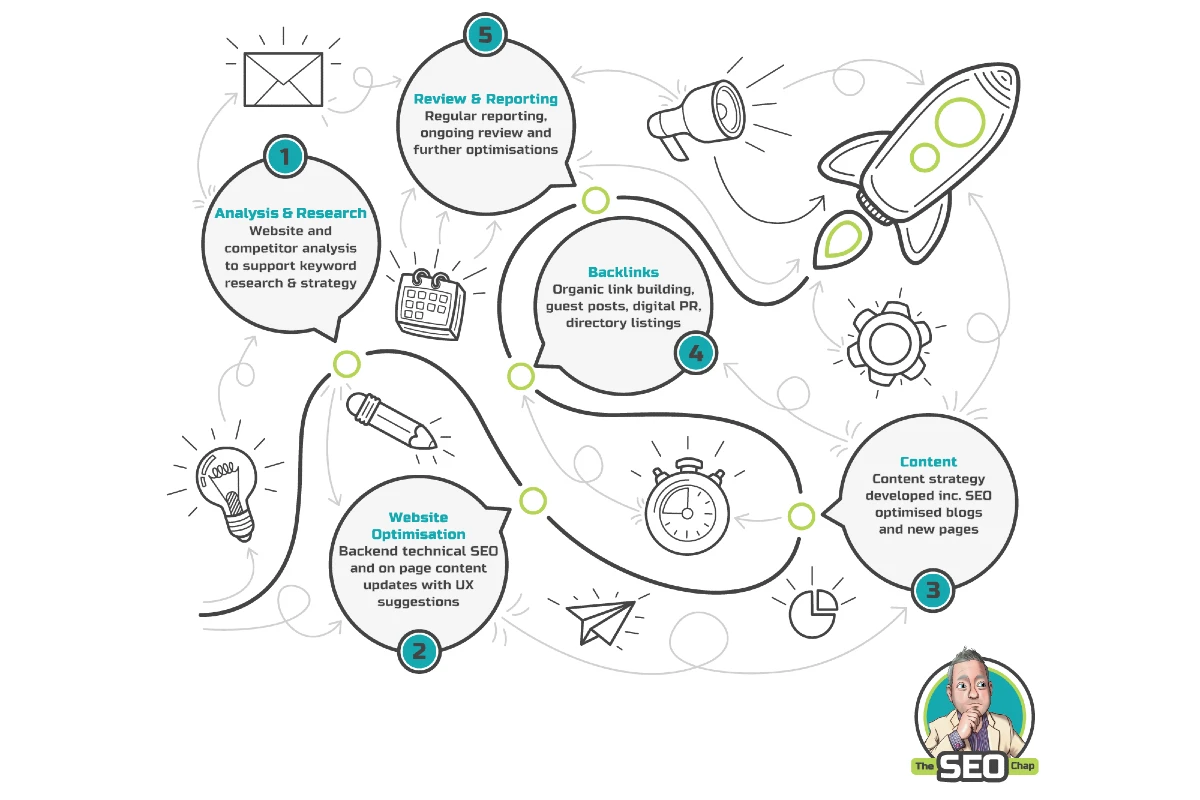
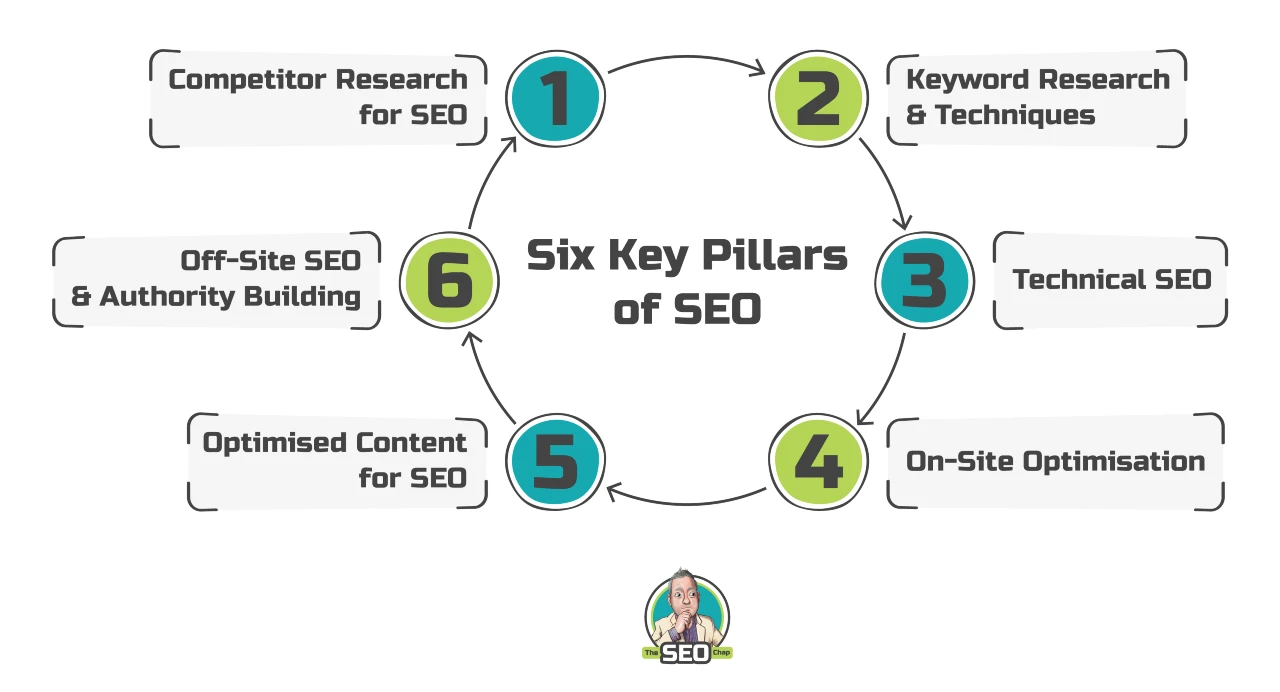
Search Engine Optimisation (SEO) is a powerful tool for businesses in today’s digital world. As we move into 2023, SEO continues to be an essential part of any successful marketing strategy. In this article, I’ll cover the six key pillars of SEO that you need to focus on if you want to stay ahead in the game, including:

  1. Competitor research for SEO
  2. Keyword research and techniques
  3. Technical SEO
  4. On-site optimisation
  5. Optimised content for SEO
  6. Off-site SEO and authority building
  7.  

By following these steps you’ll be well positioned to get your website seen by potential customers and drive more traffic to it.

Start with Solid SEO Strategy

Crafting a successful SEO strategy is the foundation for success in 2023, so don’t miss out!

Strategic planning and analytics tracking are essential components of any successful PPC or SEO strategy. This includes setting realistic goals with measurable benchmarks, as well as analysing your website’s performance through comprehensive data analysis. Additionally, backlink analysis and content marketing can be used to strengthen your overall SEO efforts.

Content should be optimised for search engine visibility while providing readers with value. Finally, it’s important to keep up-to-date on the latest algorithm changes and industry trends to maintain your SEO edge over competitors.

Creating an effective SEO strategy doesn’t happen overnight—it requires extensive research and ongoing maintenance to stay ahead of the curve in 2023. Your strategy should include researching relevant keywords, analysing competitor websites, optimising page titles and meta descriptions, and conducting link audits to ensure that all pages are properly indexed by search engines.

Furthermore, you need to track performance metrics such as organic traffic volume and keyword rankings over time to measure progress against your objectives. You should also consider leveraging social media platforms for additional exposure when crafting an overall SEO plan.

At its core, effective SEO is about understanding user intent and delivering content that meets their needs while aligning with business goals. Quality content is key when it comes to generating organic traffic from search results—but content alone isn’t enough if people aren’t able to find it due to low visibility or poor ranking positions within SERPs (search engine result pages). That’s why thorough research into target keywords and competitor strategies must be conducted before executing on any optimisations or campaigns related to SEO in 2023. Knowing what works best for your audience will help you create an effective online presence over time.

1. Competitor Research for SEO

You’re researching your competitors to make sure your SEO stands out – and that’s a must in 2023! Competitor research is an essential part of any successful SEO strategy.

It allows you to analyse how your competitors are performing on social media, what PPC advertising they use, the search engine trends they follow, their local SEO efforts, and their voice search optimisation strategies. To stay ahead of the competition in 2023, it’s important to track all of these factors.

By keeping an eye on what others are doing in terms of SEO, you can learn from their successes and failures – something that could be invaluable for staying ahead of the curve. You should also look at how long it takes them to respond to customer reviews or comments, as well as other signals such as website loading time and page structure.

A thorough competitor analysis provides you with valuable insights that will help you optimise your own SEO efforts for maximum success. Knowing who your main competitors are is only half the battle; understanding why they have been successful is key for creating a successful SEO strategy in 2023.

By analysing their techniques down to the smallest detail, you can better understand which changes need to be made in order for your own brand or site to stay competitive into the future. Taking this approach when researching competitors will ensure that your strategies remain effective and up-to-date with industry standards year after year.

2. Keyword Research & Techniques

As an SEO professional, it’s essential to understand the importance of seo keyword research and the techniques used. Keyword research software can make this process easier because it helps identify popular search terms related to your product or service.

Additionally, these tools are able to uncover hidden keywords that you may not have considered. This allows for an even more comprehensive strategy to be developed.

Keyword Research Software

Utilising keyword research software is essential for optimising search engine visibility in 2023. When used properly, this software can help marketers understand what terms and phrases potential customers are using to find their product or service on the web.

A data-driven approach to keyword research can provide AI-driven insights into how search engine results pages (SERPs) are changing over time. SEO automation tools can be used to identify new opportunities for keywords that may bring more traffic to a website. Keyword analysis tools can then be utilised to measure the effectiveness of a campaign and determine which words should be kept and which should be dropped.

By understanding the power of keyword research software, organisations will have an advantage in the ever-changing world of SEO in 2023. They will have access to better data and more comprehensive analysis capabilities. It is clear that those who use these tools correctly will be able to create successful marketing campaigns that drive high levels of organic traffic and conversions.

3. Technical SEO

I’m going to discuss Technical SEO, and more specifically, website audit tools. It’s important to use the right tools when it comes to technical SEO, as they can help you identify areas which need improvement on your site in order for it to be optimised correctly.

Website audit tools should be used regularly as part of an overall technical SEO strategy. They can help you stay ahead of any potential issues with your website.

Website Audit Tools

You’ll want to make sure you have the right website audit tools in your toolbox for 2023 SEO success!

Having a comprehensive set of tools that can evaluate multi-device optimisation, A/B testing, structured data, website speed, and UX design is essential for staying ahead of the competition. As more companies take on digital transformation initiatives, having the ability to quickly identify potential areas of improvement will be key.

Website audit tools can help you analyse performance across devices and platforms and provide actionable insights that allow you to optimise website structure and content accordingly. Additionally, these tools can assist with understanding user behavior so that you can create better experiences and maximise conversions. With the right audit tool in place, you’ll be well-positioned to succeed in your SEO efforts.

4. On-site Optimisation

Get ready to make your website shine – on-site optimisation is the surefire way to success! On-site optimisation involves making a number of tweaks and improvements to your site’s content, code, and structure in order to boost its local search optimisation, user experience optimisation, structured data optimisation, image optimisation, and page speed optimisation. By improving these areas, you can ensure that your website is well-optimised for SEO in 2023.

On-site optimisation includes tasks such as making sure that all meta tags are up-to-date, ensuring that page titles accurately reflect the content on the page, using keywords in headings, adding alt text to images, checking robots.txt files for errors, and making sure URLs are clean and concise. All of these things help search engines better understand what your website is about and how it should be indexed for searches.

It’s also important to pay attention to user experience when doing on-site optimisation. This means creating an enjoyable journey through your website by providing consistent navigation, ensuring pages load quickly, optimising images so they don’t slow down loading times, and ensuring all elements of the site are mobile-friendly. Doing these things will ensure users have an enjoyable experience on your website, which could help improve rankings in SERPs.
The Six Key Pillars Of SEO In 2023

5. Optimised Content for SEO

As someone who’s been interested and focused on SEO for years, I’m well aware that the key to success lies in optimising website content. From keyword research and page titles to meta descriptions and internal links, there are a lot of factors that have to be taken into account. Creating content-rich blog posts is essential for ranking high on search engines. It’s clear that putting in the effort to ensure your web content is optimised is an important part of any successful SEO strategy.

Optimising Web Content

You’ll want to ensure your web content is optimised for maximum impact in 2023, so focus on creating high-quality content with a clear purpose.

To do this, you should pay attention to the following:

  • Incorporate structured data into your website for improved SERP ranking.
  • Implement UX design principles to make sure your site is easy to use and navigate.
  • Optimise for voice search by using natural language and keywords that are likely to be used by voice users.
  • Make sure all of your pages have unique titles and meta descriptions that accurately reflect the page’s content.
  • Utilise content marketing strategies such as blog posts, videos, infographics, and other forms of content to increase engagement with potential customers.

By focusing on these key elements of web content optimisation in 2023, you can set yourself up for success in SEO.

Building Blogs That Rank

Now that you’ve got a handle on optimising your web content, it’s time to move onto the next pillar of SEO in 2023: building blogs that rank.

If you want to get the most out of your SEO efforts, blogging is an essential part of any successful strategy. When done correctly, blogging can boost traffic and help increase your website’s visibility in search engine results pages (SERPs).

To build blogs that will rank well with Google, Bing, and other search engines, focus on quality content and optimise each post for relevant keywords. Make sure to promote your blog posts by leveraging social media marketing campaigns and paid advertising strategies. You should also consider investing in website design services or local SEO optimisation services to maximise the reach of your blog content. Then, don’t forget that creating high-quality content is just as important as promoting it, so be sure to share new blog posts regularly!

6. Off-site SEO & Authority Building

As an SEO specialist, I’m well aware of the importance of off-site SEO and authority building to achieve optimal search rankings.
Building organic links through digital PR and other tactics is one of the best ways to boost your site’s ranking potential. By focusing on quality link building efforts and maintaining a strong online presence, you’ll be able to establish yourself as an authority in your niche.

Using High Tier Digital PR for Backlinks

Gaining a competitive edge in the digital marketplace of 2023 requires you to think beyond traditional SEO tactics and leverage the power of Digital PR.

To get started with Digital PR, it’s important to develop an understanding of who your target audience is and build relationships with influential people in your industry. You should also create high-quality content that speaks directly to your target audience and uses relevant keywords for maximum impact. Additionally, using influencers to boost brand awareness or running paid campaigns on social media platforms can help you reach a wider range of customers and increase website traffic.

Alternatively, making the most of trusted guaranteed placement digital PR is a great tactic that works well and ensures links. Not all the links are ‘do-follow’, but you can gain DA90+ links for as little as £200 from top tier publications. Get in touch with me if you’d like to know more about guaranteed placement digital PR.

Remember, regularly monitoring online reviews and responding quickly to customer feedback is essential for maintaining a positive reputation in the digital space. All these tactics combined will help you gain an edge over competitors in the busy digital marketplace.

Organic Link Building

High quality organic link building is still an important part of any successful seo strategy. Think of Google spiders bouncing around the internet, the more they find a link to your site on valued sources, the more they visit. It helps build a strong foundation for driving targeted website traffic and increasing search engine rankings. Don’t be tempted to buy cheap links or unknown quantities, you get what you pay for and you can’t risk everything with the cheap unknown on Fiverr. To achieve success in organic link building in 2023, it’s essential to work with professionals or effective outreach (that gets harder every day!).

Also remember internal linking. Creating internal links between pages on your website can help optimise your SEO efforts. By providing clear pathways for both web crawlers and users to navigate the site easily, it also helps boost page ranking by distributing ‘link juice’ throughout your website.

Summary of Six Key Pillars of SEO

In 2023, you’ll need to understand the nuances of gaining organic visibility to stay ahead – and that means mastering all aspects of SEO. It’s essential to keep up with search engine trends, such as voice search and long tail keywords. These are becoming increasingly important for successful optimisation. You’ll need a deep understanding of content management systems that help create engaging user experiences and it’s necessary to build a comprehensive strategy that combines all these elements. This will maximise organic reach on search engines.

By focusing on each of my six key pillars of SEO –

  1. Competitor research for SEO
  2. Keyword research and techniques
  3. Technical SEO
  4. On-site optimisation
  5. Optimised content for SEO
  6. Off-site SEO and authority building

– You can ensure your website will become visible when users are searching for relevant topics online.

SEO is an ever-changing landscape, and staying up to date with the best practices for 2023 is essential. The six key pillars of SEO must be employed together in order to succeed in search engine rankings. Following these tips will help you get ahead of your competition and boost your ranking potential significantly. It’s time to start focusing on these areas now if you want to stay competitive in the future!
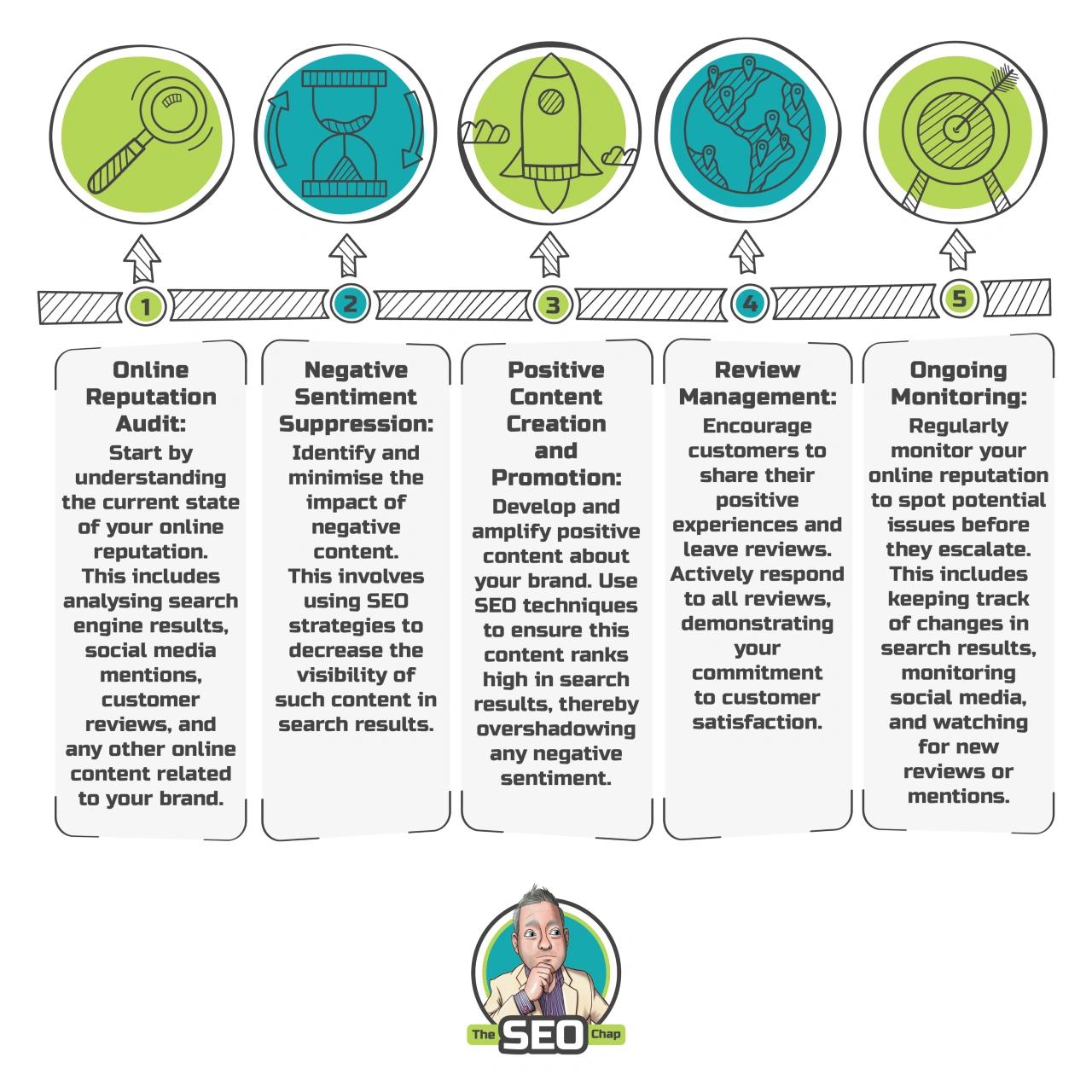
What Is Suppressing Negative Content

What Is Suppressing Negative Content

If you want to know how to suppress negative content online, then read more. It’s becoming more and more important for individuals and businesses to protect their online reputation, and that means knowing how to control and suppress negative content.

I wanted to look at what suppressing negative content is, and how to do it effectively. We’ll cover topics such as reputation management, strategies for removal, and online tools. By the end, you’ll have a better understanding of how to tackle any negative content that appears online.

What is Suppressing Negative Content?

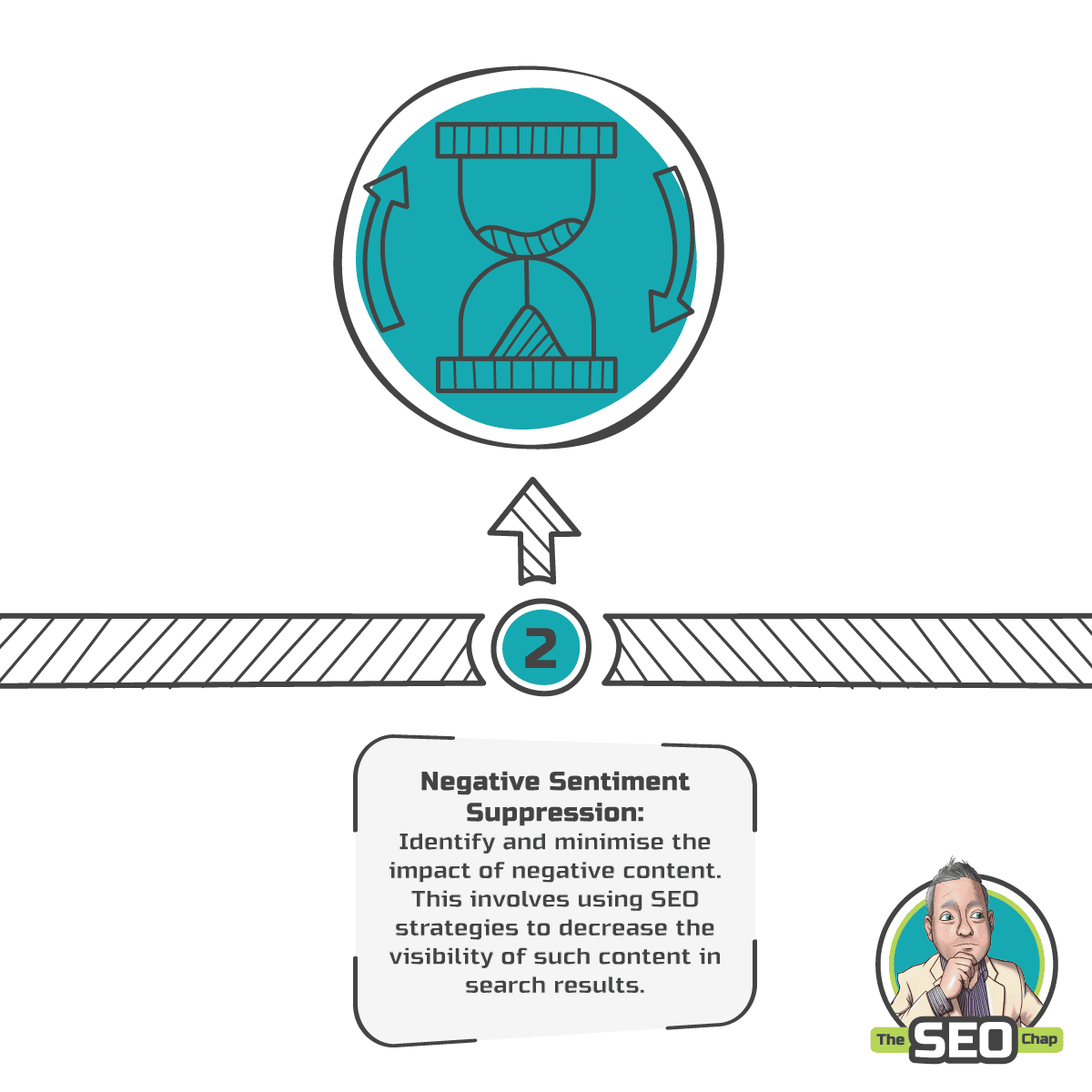
Keeping people from sharing their honest opinions can be like trying to hold back the tide. Suppressing negative content involves preventing people from expressing their honest opinions or reactions to a situation, product, or individual. This could be done by censorship, or by blocking or removing comments and posts from social media or other public platforms.

Suppressing negative content can have a variety of purposes. It can be used as a way to control the narrative around a product or individual, as well as a way to maintain order and civility on a public platform. It can also be used to reduce the spread of misinformation or to protect people from being exposed to potentially harmful or inflammatory content.

It is important to consider the implications of suppressing negative content when considering how best to use it. On the one hand, it can be a useful tool for controlling the narrative and maintaining order on public platforms. On the other hand, it can also be used in a way that limits freedom of expression and stifles honest opinions. This can lead to a lack of open discussion and debate, which can stifle creativity and prevent meaningful progress.

The decision to suppress negative content must be made with care and consideration for the effects it will have. It is important to weigh the potential benefits against the potential risks, and to ensure that freedom of expression is not unduly limited. Suppressing negative content can be a valuable tool in some cases, but it must be used responsibly and with consideration for its potential implications.

Reputation Management

Managing your reputation online means taking control of what people see when they search for you – and that starts with avoiding anything that could be considered unappealing. This means suppressing any negative content that could be associated with you from appearing on the search engine results.

Reputation management is the practice of monitoring your online presence and addressing any negative content that can be found. This involves monitoring the content that shows up when someone searches your name or brand, and taking action to ensure the most positive content is seen first.

Reputation management can be done in a few different ways. You can actively work to create more positive content that will appear on the search engine results, including blogging, creating social media accounts, or writing articles. You can also work to remove or suppress negative content that appears. This could include reaching out to the person who posted the content and asking them to take it down, or using a service that actively searches for and removes negative content.

No matter which approach you take, reputation management is an important part of protecting your online presence. It’s essential to stay on top of your brand’s reputation and make sure that any potential negative content is addressed quickly and effectively. Taking the time to monitor and address any negative content can have a significant impact on your business and personal reputation.

Identifying Negative Content

Identifying potential content that could negatively affect your online presence is essential for protecting your reputation. Knowing what to look for when browsing online can make it easier to detect and remove anything that could damage your public image.

For example, negative comments on your social media pages, negative reviews on your website, or articles written about your company in a derogatory manner. Other potential sources of negative content include online competitors, disgruntled employees, and even hackers.

To identify negative content, it’s important to stay up-to-date on the latest news and trends related to your business. It’s also important to monitor your online presence on a regular basis, making sure to review comments, reviews, and articles. Additionally, you can also set up alerts to inform you of any new content that may be generated.

By staying proactive and using the latest technologies to monitor and identify potential negative content, you can ensure that your reputation is protected and that you’re able to address any issues quickly and effectively. Taking these steps will give you peace of mind knowing that your online presence is being safeguarded.

Developing a Strategy for Removal

Once negative content’s identified, it’s time to develop a strategy for removal.

The most important factor to consider is the nature of the content.

    • Is it a one-time post, or is it part of a larger issue?
    • If it’s part of a larger issue, then the first thing to do is to analyze the source.
    • Are they known for posting negative content?
    • If not, then it’s worth considering the possibility of engaging with the poster and attempting to resolve the issue.
    • If the content is from an established source, then the best course of action is to remove the content and block the user from posting it again.

It’s also important to remember that this isn’t a one-size-fits-all solution. Depending on the nature of the content, some moderation may be necessary to ensure the content doesn’t appear again.

In some cases, it may be necessary to take legal action. If the content is libelous or defamatory, then it’s important to seek out a lawyer to determine the best course of action. Taking swift action can help to protect the reputation of the brand and reduce the potential for further damage.

Working with Online Platforms

Working with online platforms is an essential part of keeping your brand’s reputation intact, so it’s important to be aware of their policies to ensure you’re taking the right steps. It’s important to remember that each platform has its own policy for dealing with negative content, so it’s important to do your research and make sure you’re following the proper protocol.

Here are some key points to keep in mind when dealing with negative content on online platforms:

Respect the platform’s rules and policies
Be proactive in monitoring and responding to negative content
Develop relationships with the platform’s representatives to ensure swift resolution
Find ways to address the underlying issue that caused the negative content
Working with online platforms is not only about removing negative content, but also about preventing it in the first place. By knowing the platform’s policies and understanding the underlying issues that caused the negative content, you can take proactive steps to protect your brand and its reputation.

Taking the time to understand the platform and its policies can go a long way in keeping your brand’s reputation intact.

Utilising Automated Tools

Take advantage of automated tools to make keeping track of your brand’s online presence a breeze! Automated tools are becoming increasingly popular with companies of all sizes, as they can help you quickly and easily monitor your brand’s online presence.

Automated tools allow you to set up alerts, receive notifications, and even use AI-driven technology to scan social media for negative content. This allows you to address any negative comments or reviews quickly and effectively, while also allowing you to keep an eye out for any potential problems that may arise.

Another benefit of automated tools is that they can help you control the spread of any negative content. By using automated tools to monitor and track any negative content, you can identify the source quickly and take steps to limit its reach.

Additionally, automated tools can help you identify any opportunities to engage with customers in a positive way, allowing you to turn a negative situation into a positive one.

Overall, automated tools can be a great way to manage and monitor your brand’s online presence. With the right tools, you can quickly and easily respond to any negative content, while also taking the necessary steps to limit its reach. With automated tools, you can ensure that your brand’s online presence is always positive and engaging.

Hiring a Professional Service

Gain peace of mind by hiring a professional service to manage your brand’s online presence – they’ll take care of it so you don’t have to!

A professional service can help you develop a plan to effectively suppress negative content and maintain your brand’s positive reputation. They can monitor comments, posts, and reviews, responding to any negative feedback quickly and effectively. Furthermore, they can also create content that supports your brand, helping to create a positive impression of your brand across the web.

An experienced professional service will have the resources to stay up to date on the latest trends and information related to digital marketing. They will be able to keep track of potential threats and address any issues that could cause harm to your brand.

With the help of a professional service, you can ensure that your brand’s online presence is managed in a secure and reliable manner. Hiring a professional service can help you protect your brand’s reputation from any potential damage caused by negative content.

With their help, you can rest assured that your brand’s online presence will be managed in a safe and effective manner.

Using Legal Recourse

When it comes to protecting your brand’s reputation, legal recourse can be a powerful tool to put a stop to damaging content. If you are the victim of libel or slander, you can take action against the individual or organization that has posted the negative content. This could be done through a cease and desist letter or a lawsuit, depending on the severity of the content. If you choose to take legal action, it’s important to be aware of the potential consequences, such as the cost and time of litigation and the potential for further public attention.

Another important consideration when it comes to using legal recourse is to make sure that you are not infringing upon the right to free speech. Freedom of speech is a fundamental human right that must be respected, even when that speech is negative. This means that it’s important to understand the difference between libel or slander and criticism or opinion. Legal action should only be taken if you have a strong case of libel or slander against the author of the negative content.

It’s also important to consider the potential effects of the legal process. Even if you’re successful in protecting your brand’s reputation, the negative content may remain in the public consciousness, and the legal process itself may draw more attention to the negative content. Therefore, when it comes to using legal recourse, it’s important to weigh all of your options carefully.

Monitoring the Results

Staying on top of the results of your reputation management efforts is essential for ensuring long-term success. Doing so means taking periodic assessments of the progress made, as well as any new information that needs suppressing negative content, that could have been created since the last evaluation.

This should be done periodically to identify any new sources of negative content and focus efforts on removing it quickly. Having a comprehensive plan in place for monitoring the results of your reputation management is key to staying ahead of any potentially damaging content.

This plan should involve regular review of search engine results, as well as monitoring social media platforms, to ensure that all negative content is identified and addressed before it has a chance to spread. Additionally, having a system for measuring the effectiveness of the efforts and ensuring that new strategies are implemented as necessary can further improve the overall success of the reputation management.

The goal of any reputation management effort is to protect and maintain a positive online presence. By regularly monitoring the results of the efforts, it’s possible to ensure that any negative content is quickly identified and removed before it has a chance to cause real damage. With the right approach and processes in place, it’s possible to maintain a positive online presence and protect against potential damage caused by negative content.

Conclusion

You’ve done your best to suppress negative content, but it’s not always easy. Reputation management and identifying negative content are the first steps. Developing a strategy to remove it is key.

You can work with online platforms, utilise automated tools, hire a professional service, and even use legal recourse if needed. Ultimately, it’s important to keep monitoring the results to ensure the negative content is no longer visible.

Taking the necessary steps to protect your reputation can save you a lot of time and hassle in the long run.

Understanding The Importance Of Online Reputation Repair For Your Business

Understanding The Importance Of Online Reputation Repair For Your Business

You know how important it is for your business to have a great online reputation. It’s the public face of your company, and when customers search for your name, they’re looking for reviews and feedback on your services. But when you have a few negative reviews, it can really hurt your business. That’s why it’s essential that you understand the importance of online reputation repair services. With the right strategies and techniques, you can repair and maintain a positive online reputation for your business.

Let’s discuss the significance of online reputation repair and provide some tips, strategies and tipping points to help you repair and maintain a positive online reputation.

Online Reputation Repair Overview

Having the right online rep can make or break a business, so it’s essential to take control and get proactive about repairing any damage to your brand’s image. Online reputation repair is a complex and time-consuming process, but the rewards of a good reputation are worth the effort.

Companies can turn to online reputation repair experts or management companies for help, who provide brand reputation management and repair services (we do that!). They can analyse digital presence to identify internet reputation risks, offer listings management to ensure accurate business information, and develop a reputation management strategy to map out brand reputation management tactics. Positive reviews and 5-star ratings can also build and maintain a favorable brand reputation, while conversations and engagements with the audience can secure customer loyalty and trust.

By having a clear response management strategy, businesses can avoid conflicts caused by responding out of anger or in haste, and regular monitoring of online reputation is vital in order to determine which mentions require immediate action. Reputation services providers can also help repair your reputation after an impersonator taints your brand image, and leaving local citations unclaimed can make your company vulnerable to inaccurate brand information and negative reviews.

A comprehensive Google repair service plan for reputation management is necessary. This involves the creation of fresh content, combating negative reviews, fixing erroneous information, generating new reviews, and responding to online reviews. By utilising advanced reputation management software to launch email and SMS drip campaigns, and seeking positive reviews actively to push negative reviews further down over time into irrelevancy, businesses can provide online reputation repair.

Consult with experienced internet reputation management companies and create a custom reputation service tailored to your specific situation to manage negative content properly and minimise online reputation risks. With the right strategies and the help of experts, businesses can restore their reputation health and protect their brand image.

Significance for Business Growth

With online reputation repair, you can protect your brand, grow your business, and gain trust from your customers. A good online reputation repair service draws in more customers and increases profitability, while a bad one affects marketability, growth, and revenue. That’s why it’s important to prioritise brand and reputation management and ensure an accurate representation of your brand online.

Neglecting online reputation repairs can make your business vulnerable to online reputation risks and crises, so it’s important to actively monitor your online reputation and respond to negative reviews and ratings. Additionally, a positive brand reputation can increase on-site conversions by up to 270%, so proactively managing your online reputation is crucial.

A positive brand image can also protect your company from false information and negative reviews, as well as create stronger brand recognition. Moreover, leaving local citations unclaimed can make your company vulnerable to inaccurate brand information and negative reviews, so it’s important to claim business citations across niche directories and major platforms.

If you need help repairing your reputation, you can consult with experienced internet reputation management companies. These companies can help repair your reputation after an impersonator taints your brand image or when you need to clean up your digital profile.

Finally, regular reputation check-ups can prevent negative PR from damaging your brand equity.

Risks and Crises

Don’t neglect your brand’s online reputation, as it can make your business vulnerable to risks and crises. Ignoring necessary online reputation repairs can create a number of issues such as:

  • False Information:
    • Unclaimed local citations can make your company vulnerable to inaccurate brand information and negative reviews.
    • Impersonators can taint your brand image and create a need for reputation repair services.
    • Unkept promises can lead to negative online backlash and tarnish brand and personal online reputations.
  • Poor Customer Service:
    • Poor customer support can damage your brand reputation and lead to loss of profits.
    • Poor management and low salary can lead to negative online reputation reviews from ex-employees.
    • Zealous review response can spiral out of control and demand a focused approach to clean up online reputation.

Reputation repair services can help restore your reputation, but it’s important to maintain a proactive approach to reputation management. Analysing customer sentiment and responding immediately and transparently to reputation crises can show your concern to the public and help restore your reputation. Thrive’s online reputation experts can help repair reputation and mitigate damage to your brand image from negative online reviews. Consult with experienced internet reputation management companies for help with reputation repair and build a strong online presence to ensure the safety of your business.

Prioritising Brand Management

Prioritising brand and reputation management is key to ensuring accurate representation of your brand online and protecting it from false information. Brand management involves monitoring your digital presence and responding to any negative reviews or ratings. It also includes verifying the accuracy of your information on listings and review sites, so customers can find you easily.

Good online reputation management can create a strong brand recognition across the web and ramp up rankings in local searches. It’s also important to respond immediately and transparently to reputation crises to show your concern to the public and help restore your reputation.

Positive online reviews and ratings can demonstrate your transparency and client experience. Good customer support can help repair a damaged reputation due to poor service, and having trained employees to resolve issues quickly is key. Leaving local citations unclaimed can make your business vulnerable to inaccurate information and negative reviews, so it’s important to claim business citations across niche directories and major platforms to gain reputation protection online.

Having a clear response management strategy in place can also help you stay in control and avoid conflicts caused by responding out of anger or in haste. Analysing customer sentiment is important to determine the root of negative reviews and resolving the matter in private.

Online reputation services providers can help you repair your reputation after an impersonator taints your brand image. Monitoring online reputation can prevent negative PR from damaging your brand equity, so it’s important to perform regular check-ups and have a strong strategy and monitoring process in place.

A positive brand reputation can increase on-site conversions and facilitate relationship growth, so it’s important to actively manage your online reputation.

Online Reputation Control

Keeping your brand image in check and managing your online reputation can give you a sense of control over how the market perceives you. A good online reputation can demonstrate your trustworthiness and increase confidence in your brand, while poor customer service and unkept promises can lead to negative online backlash.

Ensuring you have a clear response management strategy in place can help you avoid conflicts caused by responding out of anger or in haste. Regularly monitoring your online reputation by using a combination of reputation services and software can help you identify which mentions require immediate action.

Having a proactive approach to reputation crises can also show your concern to the public and help restore your reputation. Additionally, leaving local citations unclaimed can make your company vulnerable to inaccurate brand information and negative reviews, so claiming business citations across niche directories and major platforms can help fix Google Search results and gain reputation protection online.

Engagement Impact

Gaining the trust of your customers and prospects is essential to a successful business, and managing your online reputation is a key component to achieving that goal. Engagement with customers online can have a significant impact on your brand’s reputation, both positively and negatively. Here are three key reasons why:

  1. Positive online reviews and ratings can promote trust in the brand, assuring customers that their experience with your business will be positive.
  2. Poor customer support can damage your reputation, leading to a decrease in profits. To prevent this, ensure that your employees are well-trained and can quickly resolve any customer issues.
  3. Unkept promises can lead to negative reviews that can damage your reputation, so it’s important to deliver on what you promise.

It is crucial to pay attention to your online reputation and engage with customers to ensure that your brand is accurately represented online. Taking the time to review and respond to customer feedback, as well as proactively managing negative reviews, will help to ensure that your business maintains a positive public image

Market Perception

By actively monitoring and managing your online presence, you can shape how the market perceives your brand and create a strong reputation that will encourage customers to trust and engage with you. A positive online reputation can demonstrate your business’s trustworthiness and increase confidence in your brand.

Positive reviews and ratings can assure users of your transparency and client experience, while leaving local citations unclaimed can make your company vulnerable to inaccurate brand information and negative reviews. Repairing bad reputation requires attending to employee concerns and performing brand reputation monitoring.

Unkept promises can lead to negative online backlash and tarnish brand and personal online reputations. Generating positive brand awareness and delivering on promises to fix Google Search results and clean up online reputation is key. Passionate review response can spiral out of control and demand a focused approach to clean up online reputation, so it’s important to have a clear response management strategy in place.

Regularly monitor your online reputation to determine which mentions require immediate action and consult with experienced internet reputation management companies for help with reputation repair.

Positive Reviews’ Benefits

Having positive reviews can dramatically boost your brand’s trustworthiness and confidence, resulting in more customers and increased profitability. Reviews provide potential customers with an honest and reliable method of judging your business and give existing customers a way to express their satisfaction or dissatisfaction.

Positive reviews and ratings can assure users of your transparency and client experience, leading to higher levels of engagement and a higher conversion rate. On top of this, positive reviews can also help improve your search engine ranking, making it easier for potential customers to find you. All of this helps to create a strong brand recognition across the web and ramps up your local rankings. Ultimately, positive reviews are an essential asset to any business and should be actively sought in order to ensure a good reputation.

Negative Reviews’ Impact

Negative reviews can have a greater impact than positive ones, so it’s crucial to proactively manage your online reputation. This is important to protect your brand equity and ensure customer satisfaction.

Unkept promises can lead to negative online backlash and tarnish brand and personal online reputations. Poor customer support can also damage your brand reputation and lead to loss of profits. Just like poor management and low salary can lead to negative online reputation reviews from ex-employees. To repair a bad reputation, it’s important to attend to employee concerns and perform brand reputation monitoring.

Responding immediately and transparently to reputation crises can show your concern to the public and help restore your reputation. On the other hand, having a positive brand reputation can facilitate relationship growth and conversion rate optimisation campaigns.

To effectively manage your online reputation, it’s important to regularly monitor your online mentions and determine which require immediate action. You can also consult with experienced internet reputation management companies for help with reputation repair.

Repair Strategies

You can take steps to repair your reputation and protect your brand from damage by responding to crises, monitoring reviews, and addressing employee concerns. Here are some strategies you can use to repair your online reputation:

  1. Respond immediately and transparently to reputation crises. This’ll show your concern to the public and help restore your reputation.
  2. Claim business citations across niche directories and major platforms. Doing this’ll help fix Google Search results and gain reputation protection online.
  3. Consult with experienced internet reputation management companies. They can help repair your reputation after an impersonator taints your brand image.

Regularly monitoring your online reputation is important to determine which mentions require immediate action. Reviewing customer sentiment can also help you determine the root of negative reviews and resolve the matter in private.

Having a clear response management strategy in place can help you avoid conflicts caused by responding out of anger or in haste. Reputation services providers can help businesses with reputation repair and creating a strong brand recognition across the web.

Reputation Check-Ups

Check-ups of your online reputation are key to preventing any PR disasters from ruining your brand equity. With regular reputation check-ups, you can identify any false information or malicious negative reviews that may have been posted about your business. This can be especially helpful if a former employee has left a negative review about your business.

Having a proactive approach to reputation check-ups allows you to quickly address any issues and fix any inaccuracies. It’s also important to look into local citations and ensure that your business information is accurate across directories and major platforms. Unclaimed or incorrect listings can make your business vulnerable to inaccurate information or negative reviews.

Claiming business citations and staying on top of reviews can help protect your online reputation and improve your local rankings. Reputation services providers can be hired to help repair your reputation after an impersonator taints your brand image. These companies have the expertise and experience necessary to effectively repair your reputation and mitigate the damage caused by negative reviews.

Furthermore, they can help you develop a custom reputation service tailored to your specific situation and manage negative content properly.

Sentiment Monitoring

When it comes to online reputation repair, it’s essential to understand the importance of sentiment monitoring.

Sentiment monitoring is a tool that allows you to track what’s being said about your brand online. It’s a key part of a comprehensive online reputation management strategy. By keeping an eye on the conversations people are having about your brand, you can identify potential issues early and address them before they become a major reputation crisis.

Sentiment monitoring also allows you to identify customer satisfaction and dissatisfaction. It can provide valuable insights into how your customers feel about your products or services, as well as how you can improve. Additionally, sentiment monitoring can help you better understand customer preferences and desires. This can help you tailor your products and services to better meet their needs.

By engaging in sentiment monitoring, you can better manage your online reputation and ensure that it reflects your brand and values positively. Monitoring your online reputation can help you build trust with your customers and protect your brand from negative reviews and false information and help you create a better customer experience and increase conversions.

Conclusion

As a business owner, it’s essential to understand the importance of online reputation repair. Taking the time to focus on your brand’s reputation will help ensure that it remains positive and will help you to grow your business.

Implementing strategies such as prioritising brand management, controlling online reputation, repairing negative reviews, and conducting regular reputation check-ups, will help keep your business’s reputation in a good place.

Don’t overlook the importance of online reputation repair – it’s essential to the success of your business and The SEO Chap can help.

Basic Fundamentals Of SEO

Basic Fundamentals Of SEO

Search engine optimisation (SEO) is a critical part of any successful website or online presence. It helps to ensure that your site is visible in search engine results, and it can also help to increase traffic and conversions.

We can take a look at the very basic fundamentals of SEO and how you can use them to improve your own website’s performance. We’ll explore topics like keyword research, competitor analysis, on-page optimisation, mobile SEO, voice search optimisation, reporting & analytics, and staying up-to-date with best practices.

With this guide in hand, you’ll be well on your way to optimising your website for better visibility and better results!

Understanding What is SEO?

SEO is not mysterious, but an ever-evolving puzzle that can help your website rise to the top of search engine results – if you know how to put the pieces together.

SEO stands for Search Engine Optimisation and refers to an array of techniques used to improve a website’s visibility in organic search engine results. SEO involves using keywords, meta tags, content optimisation, link building, and other tactics to benefit from higher rankings on SERPs (Search Engine Results Pages).

It’s important to note that SEO is not a one-time task, consistency is key as it requires ongoing effort and monitoring over time. The algorithms used by search engines are constantly changing, so it’s important to stay on top of these updates in order to keep up with the competition and maximise your website’s potential.

Additionally, there are many tools available for optimising your site for better performance in search engines. Good SEO practices will help bring more visitors to your site who are interested in what you have to offer.

This means that when done correctly and consistently, SEO efforts can result in increased leads or sales as well as improved brand recognition and trust. Taking the time to understand basic fundamentals of SEO can pay dividends by helping you stand out among competitors while also boosting traffic on your website.

The Benefits of SEO

With SEO, you can maximise your website’s visibility and seize the opportunity to reach more potential customers.

Search engine optimisation is an essential digital marketing strategy that helps businesses gain a competitive advantage in the online market. By optimising content and structure of webpages, companies can ensure their site appears at the top of search engine results pages (SERPs). This puts them ahead of competitors who haven’t invested in SEO, allowing them to draw in more clicks and website visits from interested users.

SEO also has the power to increase a website’s conversion rate by improving user experience (UX). When visitors come across content that is relevant and easy-to-navigate, they’re more likely to stay longer on a page and explore further — leading to higher conversions.

Additionally, when people discover helpful information about products or services through organic search results instead of ads, it builds trust between them and the business.

One other great benefit of SEO is its ability to drive long-term growth for brands. Through continuous efforts such as keyword research, link building, page optimisation, etc., marketers can establish a solid foundation for sustainable success over time — rather than relying solely on short-term tactics like ad campaigns or promotions that quickly expire after they’ve been used up.

Investing in SEO now will result in long-term rewards down the road!

Essential Keyword Research

Conducting keyword research is a crucial part of any successful SEO strategy, helping you identify the terms your potential customers are using and ensure your content reaches them. By studying the language that people use when searching for topics related to your business, you can create content that speaks directly to them and helps boost search engine rankings.

Keyword research also allows businesses to monitor their progress over time and adjust their approach if needed. The process of keyword research involves identifying which words and phrases are most commonly used when searching for something, both by potential customers as well as competitors.

It’s important to consider not only the volume of searches but also how specific they are, because more targeted keywords often provide more qualified leads than generic ones. Additionally, understanding what terms people type into search engines can help inform decisions about website structure and navigation since users tend to rely on natural language rather than predetermined paths.

By taking the time to analyse data from keyword research tools such as Google Trends or Answer The Public, businesses can gain valuable insights into how users interact with their site and what kind of content resonates best with them. This knowledge can be used to optimise existing pages or create new ones tailored specifically for higher visibility in search results.

Investing in keyword research pays off in the long run, resulting in improved website traffic and increased profits for your business.

Competitor Analysis

Competitor analysis is a key part of any SEO strategy, allowing you to gain an understanding of the competition and how their approach differs from yours. By examining what your competitors are doing, you can identify opportunities for improvement and areas where you can gain an edge over them.

There are two main aspects to competitor analysis:

Content – Analysing content helps you to understand what type of content resonates with your target audience, as well as what topics they’re interested in. You can also use it to find gaps in your own website’s content that need filling.

Technical – Technical analysis looks at things like page loading times, mobile-friendliness and overall user experience. It also looks at how well your competitors rank for certain keywords or phrases, giving you valuable insight into their SEO strategies.

Competitor analysis will provide you with the necessary data to refine your own SEO strategy and give yourself a competitive edge. Knowing who your competitors are and understanding their weaknesses will help you focus on the areas that will allow you to excel above them in search engine rankings.

On Page Optimisation

On-page optimisation means making sure your website is optimised for the search engines, so you can rank higher and drive more organic traffic. It involves optimising key elements such as titles, headings, meta descriptions, images, and content to ensure your pages are indexed correctly by the search engine crawlers.

This will help your site appear higher in the SERPs when users search for relevant queries. By using on-page optimisation techniques like adding keywords strategically into page titles and headings, as well as ensuring that all URLs include relevant words, you can make sure that your pages are found easily by the right people.

Additionally, including internal links throughout your website helps to keep visitors engaged and improve their user experience. Optimizing the content of a page with targeted keywords also boosts its visibility in SERPs.

By creating keyword-rich content that is both informative and engaging to readers, it increases its relevance to what they’re searching for while also helping to build backlinks from other websites which leads to increased trust from search engines like Google.

Technical SEO

Technical SEO can be a bit tricky, but don’t worry – it’s totally doable if you break it down into smaller tasks.

Technical SEO is all about making sure the infrastructure of your website and its content is optimised for search engine algorithms. This includes loading speed, mobile-responsiveness, indexing, structured data and more. You’ll need to keep an eye on server issues such as 404 errors and 301 redirects as well as any broken links or images that might cause problems for visitors or crawlers.

You can also use technical SEO to make sure your page titles, meta tags, and descriptions are formatted correctly so they appear in search results when someone searches for relevant keywords. This will help people find your pages faster without having to click through multiple pages on a given site.

Additionally, using structured data with Schema Markup can improve how your content appears in SERPs by giving users more information about what each page offers at a glance.

Finally, you should always run regular tests and audits on your site to ensure everything is running smoothly from both a technical standpoint (server logs) and a UX perspective (bounce rates). If anything isn’t working properly or could be improved upon, then this should be addressed right away so that visitors get the best possible experience when visiting your website – which is ultimately what SEO is all about!

Quality Website Content

Having quality website content is key to drawing in visitors and keeping them engaged, so make sure your pages are packed with useful information that’s easy to read and understand.

Quality content should be relevant, interesting, up-to-date, informative, and unique. It should also be organised in a logical way that follows the natural flow of reading. Use appropriate headings and subheadings to give structure to the page. Try to keep paragraphs short – ideally no more than 4 sentences each – as this makes it easier for readers to take in the information quickly.

Furthermore, use images and visuals throughout your content as these can help break up long chunks of text and add visual interest to your pages.

It’s important that you have an SEO strategy when creating content for your site too. This means researching keywords related to what you’re writing about so you know which words people are likely searching for online when they look for a topic like yours.

Keyword research also allows you to identify any potential gaps in the market or topics that haven’t been covered yet by other sites – giving you an opportunity to create something new and original that no one else has done before!

When crafting website content always ensure it is well written, edited thoroughly for spelling and grammar mistakes, keyword optimised with relevant search terms included where appropriate, linked properly both internally (within your own website) and externally (from other websites), shareable on social media platforms with engaging titles & descriptions, SEO friendly (including meta tags & descriptions), easy-to-read (with proper formatting & headings) – all of these elements will help increase engagement levels on your site!

Structured Data Markup

You can use structured data markup to give search engines a better understanding of the content on your website, helping them deliver more relevant results to users.

Structured data is code written in a standard format that adds additional context and meaning to content on webpages, making it easier for search engines to parse information. By adding this code, you’re providing more detail about the page’s content so that search engine algorithms can better understand what your page is about and how it should be ranked.

Structured data markup can also be used to add rich snippets or other visual features in the SERPs (Search Engine Results Pages). Rich snippets are extra bits of text or images that appear alongside each organic result in Google and other search engines. This helps draw attention to your listing, driving more clicks than listings without rich snippets.

Additionally, having an image next to your listing will make it stand out even further from competitors who don’t have one.

Structured data provides benefits beyond just appearing in SERPs; it also allows you to become eligible for certain types of “rich results” such as carousels, featured snippets, and knowledge graphs which appear when a user makes specific queries.

It also allows you to control how different pieces of content are displayed within social media platforms such as Twitter and Facebook, giving you greater control over how people experience your brand online.

    • Improves SEO performance by giving search engines additional context
    • Helps create richer listings with images and textMakes pages eligible for enhanced “rich results”
    • Allows for greater control over branding across social media platforms and other online channels.

Creating Quality Backlinks

Now that you understand the basics of Structured Data Markup, it’s time to move onto a different part of SEO – creating quality backlinks. Link building is an important factor when it comes to search engine optimisation and shouldn’t be overlooked.

Creating good quality backlinks helps your website rank higher in SERPs and can make all the difference for your page’s visibility. The best way to create quality backlinks is by gaining links from trusted websites with relevant content for your topic.

You can also get links from external sources such as social media sites and discussion boards. If you’re going to use this method, however, make sure you’re adding valuable content that adds something new or helpful to the conversation instead of just trying to get a link out there without any context or substance behind it.

Additionally, ensure whatever link you post is relevant and useful for readers since Google will penalise any irrelevant or low-quality links associated with your site.

A great way to build quality backlinks is by guest blogging on other relevant sites. This allows you to share your knowledge on another platform and gain credibility through being featured in a reputable source as well as get more people exposed to what you have written about – both of which help increase traffic towards your own website!

However, once again make sure what you write adds value – if not then no one will want to link their website with yours so try not only to be informative but entertaining too!

Digital PR

Harnessing the power of digital PR can open up a whole new world of potential for your website, helping it reach an even wider audience.

Digital PR is the process of getting press coverage through digital channels such as online news outlets. This type of publicity can help build brand awareness, increase website traffic, and improve search engine rankings.

It’s important to create content that is valuable to both readers and journalists so that they see your story as worth sharing or publishing. Content should be well-researched, accurate, original, and engaging in order to capture their attention.

Digital PR also involves building relationships with influencers in your industry who have a large following on social media platforms like Twitter or Instagram. These relationships are key because influencers can help spread the word about your content more quickly than traditional methods.

Additionally, partnering with other websites or blogs in your niche can further amplify your message and get more eyes on your brand. Having endorsements from authoritative sources will also give you credibility and boost rankings on search engines like Google.

By utilising digital PR tactics such as creating compelling content, building relationships with influencers, and partnering with other websites or blogs in your niche you can increase visibility for your website significantly.

The benefits include increased website traffic, better search engine results page (SERP) placement, improved brand recognition, higher engagement rates from users, and ultimately better ROI for any marketing efforts put forth by the company or brand.

Guest Posts

Grow your web presence and expand your reach with the power of guest posts – a powerful way to get your content in front of new audiences. Guest posting allows you to leverage another website’s existing audience and visibility, while also providing an opportunity for you to showcase your expertise.

Here’s why guest posting might be beneficial for you:

1. You can increase organic traffic to your website by adding new links from other websites.

2. You can establish yourself as an authority on a topic or industry by having your content featured on other sites.

3. You can build relationships with influencers in your field and benefit from their audiences.

Guest posts help you gain credibility among potential customers, partners, investors, and employers – all while promoting yourself as a thought leader in whatever niche you’re targeting. It’s also one of the most cost-effective ways to attract more visitors to your site without having to spend money on advertising or buying backlinks directly.

So start building relationships with fellow bloggers and create great content that makes readers want to share it!

Image Optimisation

Optimise your website’s images and bring them to life with vivid, eye-catching visuals that draw your viewers in. Image optimisation is an important part of SEO because it can help improve the user experience by reducing page loading times and increasing engagement.

Optimising images for SEO involves compressing file sizes to make sure they load quickly, using relevant keywords in their filenames and ALT text, and making sure they are appropriately sized for different devices. This helps ensure that search engines are able to properly index the images as well as improving how they appear on the page.

Making use of image sitemaps can also be beneficial when it comes to image optimisation. Image sitemaps allow search engine crawlers to easily find all of the images on a website while providing additional information such as descriptions, captions and other related metadata.

Having an up-to-date image sitemap will assist Google in understanding what each image is about so that it can be displayed correctly in results pages or featured snippets.

When creating visuals for your website, try to think about how people might use them if a search engine cannot understand them properly. For example, you should always include descriptive alt tags with each image so that visually impaired users can still access the content even if they cannot see it on screen.

Additionally, where possible you should link out from each image to related content which provides more context around it – this not only improves accessibility but also helps reduce bounce rates which is another important factor for SEO success!

Local SEO

Leveraging local SEO can be key to enhancing visibility and driving targeted traffic to your website in specific geographic areas. Local SEO strategies involve optimising your website content and listings, setting up a Google My Business page, building local citations, engaging with customers on review sites, and more.

Local search engine optimisation is all about understanding the needs of users searching for local services or products and helping them find you quickly by targeting geographically relevant keywords in your content. If you’re targeting a certain city or area, make sure to include that information in titles, descriptions, body text, and other places on the web where it will be noticed.

It’s also important to ensure that any contact information listed is accurate — incorrect address info will hurt your rankings. Creating quality backlinks from other websites is an essential part of local SEO as well. You want links from reputable sources that are related to your business or industry — such as directories, chamber of commerce pages, or trade organisations — since they help boost trustworthiness with search engines like Google.

When selecting anchor text for link building campaigns, focus on using localised keywords whenever possible.

Mobile SEO

Making sure your website is mobile-friendly is essential for reaching customers on the go and giving them a great user experience. Mobile SEO is a type of search engine optimisation (SEO) that focuses on optimising websites for users who access websites via their mobile devices.

This means ensuring that the website looks good and functions correctly on smaller screens, as well as being structured in such a way to make it easier for search engines to index it for mobile searches. The core elements of any successful Mobile SEO strategy include creating an optimised page title, description, and URL structure; optimising page content; creating a responsive design; improving page speed; promoting through app stores; using social media to inform people about your mobile presence; and using local targeting techniques like geo-location tags.

When it comes to designing a site with Mobile SEO in mind, there are several important factors to consider. First, ensure that your site uses modern web standards like HTML5, CSS3 and JavaScript so that your pages render correctly across all devices and browsers. Second, create an intuitive user interface with easy navigation features so visitors can quickly find what they’re looking for without having to scroll or click too much.

Third, use image compression techniques within HTML code so images load quickly even on slower connections. Finally, optimise page titles and meta descriptions to maximise visibility in major search engines’ results pages (SERPs).

Optimising page speed should also be part of any comprehensive Mobile SEO strategy since this will directly impact how quickly people can access information from the webpages you design for them. To do this effectively requires reducing file sizes wherever possible by compressing images before uploading them onto the server along with minifying code snippets used within the site’s HTML codebase.

Additionally, caching assets can help reduce loading times while implementing techniques like lazy loading can help improve overall performance across devices by only loading assets when they are needed instead of upon initial load time of each webpage.

Voice Search Optimisation

Harnessing the power of voice search can be a game-changer for businesses looking to increase visibility and reach new customers.

Voice search optimisation is a process that requires an understanding of how people use these types of queries, as well as the technology behind them. Here are some key takeaways when it comes to optimising for voice search:

    • Utilise natural language searches rather than keyword strings
    • Make sure your content is easily digestible, so it can be read out loud by voice-enabled devices
    • Optimise page load speed since most voice queries require instant results
    • Use local SEO tactics to target users in specific areas
    • Incorporate schema markup on pages that you would like to have featured in voice search results

Voice search has become increasingly popular over the past few years and offers many opportunities for businesses to gain exposure and grow their online presence.

By implementing strategies tailored to this type of search, companies can significantly improve their visibility and reach more customers than ever before.

Reporting, Analytics and Tracking

Gain insight into how your website is performing by tracking and analysing data from user visits with reporting, analytics, and tracking.

Reporting allows you to identify trends in user behavior and interpret their impact on the success of your site.

Analytics help you measure the effectiveness of campaigns, optimise content for search engine optimisation (SEO), track conversions, and more.

Tracking enables you to monitor click-throughs from various sources such as email campaigns or social media posts to determine which sources are producing the most leads or customers.

By combining all elements of reporting, analytics, and tracking, you can get a comprehensive overview of how users interact with your website.

You can also evaluate individual pages for performance metrics like page views per visit or average time on page. This allows you to identify where visitors are leaving your site so that areas can be improved upon if needed.

Additionally, it helps you understand customer intent so that content can be tailored accordingly.

Using reporting tools such as Google Analytics gives an in-depth look at customer activity on your website so that necessary changes can be made quickly and efficiently in order to improve overall performance.

Reports allow marketers to analyse patterns over time while analytics provide insights into how well particular marketing strategies are working for conversion optimisation techniques like A/B testing or personalisation tactics like retargeting ads.

Together these elements give a 360 degree view of customer behavior on your website allowing the most informed decisions possible to drive desired results.

Staying Up-to-Date with SEO Best Practices

Stay ahead of the game with SEO best practices and keep your website optimised for success. To stay up-to-date, there are a few key elements to consider:

1. Monitor industry trends: Keep an eye on the latest news in the world of search engine optimisation so you can stay informed about what’s new and how it might affect your website performance.

2. Test out new tactics: Test out different strategies to see which ones work best for your website. This includes things like keyword research, content optimisation, link building, and more.

3. Utilise tools and resources: There’re various powerful tools available to help you optimise your website for SEO success, such as keyword research tools, audit tools, and analytics platforms. Make sure you’re taking advantage of these resources when possible to ensure maximum visibility for your site.

By following these steps, you can stay up-to-date with all the latest changes in search engine optimisation. You can make sure that your website is always running at its peak performance level. You will be able to remain competitive in the ever-changing landscape of SEO by staying abreast of all the current trends and techniques that are driving web traffic today.

Conclusion

You now know the basics of SEO and how to use it to your advantage. You’ve learned about keyword research, competitor analysis, on-page optimisation, mobile SEO, voice search optimisation, and reporting analytics and tracking.

By staying up-to-date with the latest SEO best practices, you can ensure that your website continues to grow and rank well in search engines. Take action today by implementing these fundamentals – you won’t regret it!

With a little bit of effort and time, your website will be seen by more people than ever before.